
Mt Shasta Hotlum Bolam Ridge
3 days / 2 nights
Price per person
$1,595
The Hotlum Bolam Ridge is a perfect fit for climbers who want something a little more involved than a 2-day Avalanche Gulch or the 3-day West Face climb, but aren’t quite ready to jump into full-on glacier travel like the 5-Day Hotlum Glacier Course. It strikes a nice middle ground and is a great training route for trips like the Mexican Volcanoes. The Hotlum Bolam ridge is remote, a bit more demanding, but still approachable for guests with strong fitness and some snow travel experience.
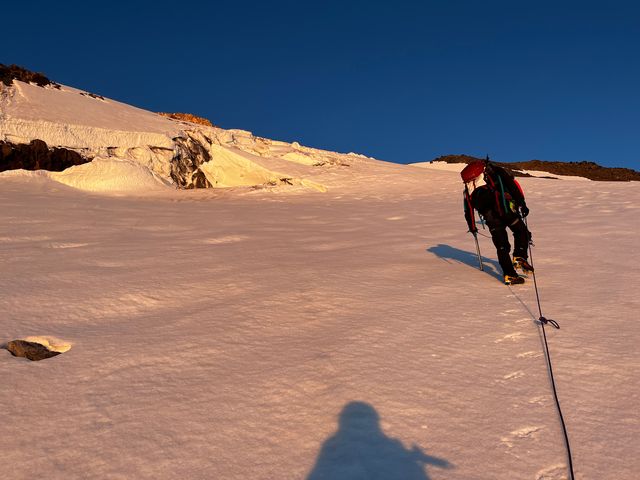
The route starts out at the Northgate Trailhead, and makes it’s way through the forest before we begin to ascend a rocky ridge that parallels the Hotlum Glacier. After gaining elevation on mostly rock and snow, we make a short traverse onto the glacier before climbing a steep snow slope called “the ramp.” Once we’re above that, it’s a mix of snow and rock all the way to the summit.
Fewer crowds, big views, one of the best camp locations available, along with some of the most engaging climbing on the mountain are just some of the reasons this is a guide favorite.
Departure: Mt Shasta, California
Duration: 3 days / 2 nights
Skill Level: Previous mountaineering experience is needed.
Group Size: 6
Guide to Guest ratio: 1:3
Know Before You Climb
Mt Shasta Hotlum Bolam Ridge 3-Day Itinerary
Day 1 – Pack Check and Approach to Camp
The trip begins at 8:00AM in Mount Shasta with a morning meeting at the SWS Mountain Guides office. The group completes a pack check together, and guides issue any remaining shared gear needed for the climb. Water can be topped off before we drive to the Northgate Trailhead.
From the trailhead, the approach begins through forested terrain and gradually opens onto Shasta’s volcanic north slopes. As we gain elevation, the Hotlum and Bolam Glaciers come into view, giving a sense of the route ahead. By mid-afternoon we arrive at high camp, around 10,000 feet, and set up tents. Depending on conditions and the group’s pace, guides may lead a short skills refresher covering snow and rock travel techniques. Dinner is shared at camp, and the evening is spent reviewing the plan for summit day and getting rest for the early start.
Day 2 – Summit Attempt
We begin before dawn with breakfast and final preparations. From camp, we follow the rocky ridgeline that runs between the Hotlum and Bolam Glaciers. The ridge leads to the Hotlum Glacier, where we put on crampons, carry ice axes, wear helmets, and rope up for the climb. The route traverses partially onto the glacier before ascending a feature known as the ramp. This section is snow covered and icy at times, but does not require prior glacial experience.
At the top of the ramp we reach a sub-plateau before returning to mixed terrain of rock and snow for the final ascent to the summit plateau. Once on the plateau, we arrive near an area known as Sulphur Springs. From there, we make a short traverse to the final summit pinnacle. After spending time on the summit, we descend the same route back to high camp for our second evening, where we enjoy dinner and rest after a long day.
Day 3 – Return to the Trailhead
The last morning begins at a relaxed pace. After breakfast, the group packs up camp and begins the descent. The hike retraces the approach, moving from the open volcanic slopes back through forested terrain. Along the way there are still views of the Hotlum and Bolam Glaciers as we leave the alpine zone behind. We reach the Northgate Trailhead by midday, where we left our vehicles at the beginning of the climb. Once at the trailhead, we head back to our office in Mount Shasta and the climb concludes as we say our goodbye’s.
Shasta - FAQ
- Q: What areas does SWS Mountain Guides operate in?
A: SWS operated throughout California in both the Sierra Nevada and Mt Shasta Region since 1981 under the same management, plus Oregon & Nevada, and international destinations around the world for over 30 plus years, guiding in mountaineering, rock & ice climbing, ski & snowboarding guiding, and avalanche education. - Q: How do I know if I’m ready for a guided climb?
A: We offer courses, climbs, and clinics for all skill levels. Your readiness depends on your fitness, experience, goals, and comfort in the outdoors. We aim to provide courses and trips designed to build your skills. See physical requirements list above. - Q: What is a good weather resource for Mount Shasta?
A: The National Weather Service, Windy.com, and local avalanche center weather stations are all reliable. Make sure to check updated conditions before your trip, as mountain weather can change rapidly on Mt. Shasta. - Q: How much water should I bring for a climb?
A: We recommend having a capacity of carrying 2–3 liters per person for a most trips, but this varies with conditions, exertion, and route. For most routes on Mt. Shasta, we can make the approach into camp with carrying approximately 2 liters of water but the summit day will require carrying 2-3 liters. We can advise exact needs for each trip during the first morning we meet for a pack check. - Q: What should I pack for a guided trip?
A: We provide your helmet, harness, ice axe (if needed), and a tent plus stove and pots for melting & boiling water. This typically means your essentials include appropriate clothing layers, a waterproof jacket & pants, gloves, hat, mountaineering boots, sunglasses, sunscreen, water, snacks, and any personal items you might want. We provide a detailed packing list for your trip in your reservation confirmation email, or you can find some recommended items in our Mountain Shop. - Q: Do I need prior climbing experience?
A: Not always. For some routes on Mt. Shasta, we do require prior experience, however, we have courses for beginners and trips designed for new climbers as well. For some of our other destinations or more technical objectives we do require more specific climbing experience to make sure it’s the right fit and appropriate for your skill level. If you have questions about this, please contact our office or inquire online. - Q: What is your group size?
A: We keep groups small to ensure personalized attention, and a better experience for our guests. Generally, we operate at a 1:2 or 1:3 guide-to-guest ratio. However, depending on the trip, we may go up to a 1:4 ratio (Clear Creek on Mt. Shasta, or non-summit bound glacier courses). - Q: Are your guides certified?
A: Yes. All our guides hold certifications in various fields or disciplines many have Outdoor Recreation Degrees both BA / BS and MA. Some hold certifications from the American Mountain Guides Association (AMGA) or equivalent international organizations. All our guides are highly experienced in their specialties. To read more about our guides and their various certifications and backgrounds, visit the ‘Our Guides’ page to learn more. - Q: How physically fit do I need to be?
A: Fitness requirements vary by trip, and the objective. Most climbs require moderate to high aerobic endurance, strength, and comfort at altitude. We recommend our partners at Uphill Athlete to help you prepare physically for a climb with us or anyone else. - Q: Can I rent gear from SWS Mountain Guides?
A: We offer rental options for select items like puffy jackets, trekking poles, snowshoes, mountaineering boots, crampons, and avalanche gear. Our rental items are only available to our guests, so a link to our online rental store is provided with your confirmation email after making a reservation with us. - Q: What is your cancellation or refund policy?
A: We have a cancellation policy; however, we don’t want to operate like an airline and be super rigid. We do our best to work with our guests if they need to cancel or change a reservation. Please keep in mind that our options become more limited once we’re within 30 days of the trip date, so we ALWAYS recommend trip insurance for our guests. Our full cancellation policy is provided with your reservation confirmation, or you can find it on our website HERE>> - Q: How do I train or prepare for a climb?
A: Focus on cardio, strength, and hiking with a pack. Specific courses in mountaineering, glacier travel, and snow skills can accelerate your readiness and confidence. For more personalized training suggestions and programs, we recommend contacting our partners at Uphill Athlete. - Q: Is mountaineering safe?
A: All outdoor activities have inherent risks, including weather, altitude, and terrain hazards. Our guides are trained to recognize, manage and reduce your exposure to these risks when possible. We take our guests’ trust in us seriously and do all that we can to minimize the hazards associated with any trip while still providing an exceptional experience. - Q: How do I know what trip is right for me?
A: We are happy to help match you with a trip based on your experience, fitness, and goals. Feel free to contact us by phone or email at any time if you need. We want to make sure you can make the best choice for your abilities, experience, and goals.