
Everest Base Camp Trek
14 days / 13 nights
Price per person
$3,595
SWS Mountain Guides invites you to join us for an unforgettable adventure in Nepal’s Khumbu region, on a trek that reaches the legendary Everest Base Camp and the surrounding high Himalayan valleys. Located at 5,364 meters, this journey gives climbers and trekkers the opportunity to explore the peaks, glaciers, and alpine landscapes of the Everest region. Our trips are led by experienced American and Nepali guides who provide expert instruction, local knowledge, and a personal approach throughout the trek.
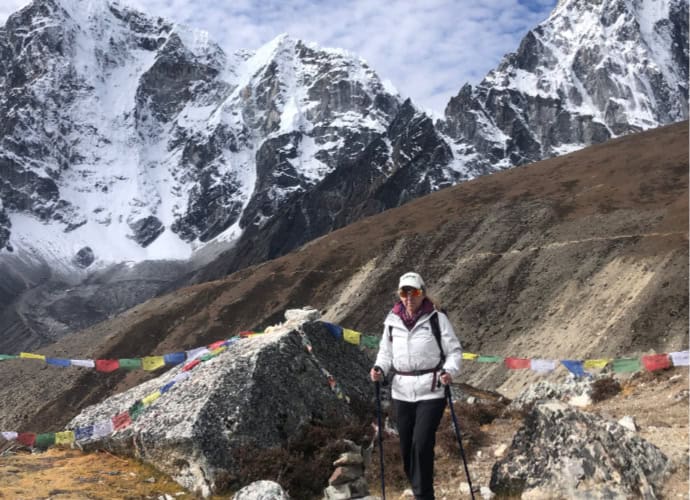
The Everest Base Camp trek offers a complete mountain experience for nature and adventure enthusiasts. Along the route, you will cross glacier-fed rivers, snowy ridges, and high alpine valleys while observing local wildlife and unique plant life that make this region remarkable. The challenging terrain develops endurance and provides panoramic views at every stage of the journey.
Our trips are designed to inspire, challenge, and rejuvenate your spirit. Custom and private treks are available, guided by US and Nepali experts with more than a decade of experience trekking and climbing in the Everest region. This expedition is more than a trek; it is an immersive experience into the heart of the Himalayas, culminating at the legendary Everest Base Camp and surrounding mountain camps.
Departure: Kathmandu, Nepal
Duration: 14 days / 13 nights plus Travel Days
Skill Level: Previous hiking and backpacking experience required. No previous mountaineering experience is needed.
Group Size: 6-8
Guide to Guest Ratio: 1:3/4
Know Before You Go
Everest Base Camp Trek Itinerary
Season: April & October
Duration: ~15 days trekking + international travel days
Highest Point: Kala Patar – 18,200 ft / 5,545 m
Travel Days – U.S. → Kathmandu
Plan 2–3 days for flights depending on stopovers and time changes. Crossing the International Date Line means you’ll lose a day traveling to Nepal. On the return, flights often arrive the same day you depart, but allow extra recovery days.
Optional stopovers are available in Bangkok, Dubai, or Delhi.
Day 1 – Arrival in Kathmandu (4,260 ft / 1,300 m)
Arrive in Kathmandu. Transfer to hotel and meet your guides and team. Evening free to rest.
Day 2 – Explore Kathmandu
Sightseeing in the Kathmandu Valley, including a visit to Swayambhunath (Monkey Temple). Overnight at hotel.
Day 3 – Kathmandu → Lukla (9,315 ft / 2,840 m) → Phakding (8,560 ft / 2,610 m)
Scenic 45-minute flight to Lukla. Trek 3–4 hours along the Dudh Koshi River to Phakding.
Day 4 – Phakding → Namche Bazaar (11,283 ft / 3,440 m)
Follow the river before climbing steadily into the bustling Sherpa hub of Namche Bazaar.
Day 5 – Acclimatization in Namche Bazaar
Rest and acclimatize. Optional hike to the Everest View Hotel (12,600 ft / 3,840 m) with panoramic views of Everest, Ama Dablam, and Lhotse Shar. Visit a Sherpa village on the return.
Day 6 – Namche Bazaar → Tengboche (12,660 ft / 3,860 m)
Descend to the river, then climb to Tengboche. Visit the famous Buddhist monastery and attend evening prayers.
Day 7 – Tengboche → Dingboche (13,850 ft / 4,243 m)
Trek through rhododendron forests, cross the river, and climb above the tree line to Pheriche.
Day 8 – Acclimatization in Dingboche
Rest day for altitude adjustment. Optional visit to the Himalayan Rescue Association Hospital for their altitude lecture.
Day 9 – Dingboche → Lobuche (16,100 ft / 4,910 m)
Steady climb with dramatic views of Nuptse, Lhotse Shar, and Everest.
Day 10 – Lobuche → Gorak Shep (16,850 ft / 5,140 m) → Everest Base Camp (17,580 ft / 5,364 m)
Trek to Gorak Shep, then continue to Everest Base Camp along the Khumbu Glacier. Return to Gorak Shep for the night.
Day 11 – Gorak Shep → Kala Patar (18,200 ft / 5,545 m) → Pingboche
Early climb of Kala Patar for stunning views of Everest. Descend all the way to Pheriche for rest.
Day 12 – Pingboche → Tengboche
Trek back with time to revisit Tengboche Monastery.
Day 13 – Tengboche → Namche Bazaar
Descend to the river, then climb back up to Namche.
Day 14 – Namche Bazaar → Lukla
Final trek day, retracing the route to Lukla. Overnight in lodge/hotel.
Day 15 – Lukla → Kathmandu
Morning flight to Kathmandu. Free afternoon. Overnight at hotel.
Travel Days – Kathmandu → U.S.
Depart Kathmandu for flights home. With the International Date Line, you’ll often arrive the same day you leave. Plan extra days for rest and recovery.
Optional stopovers available in Bangkok, Dubai, or Delhi.
General Expedition FAQ
Why go with SWS Mountain Guides?
SWS has been operating throughout California — in both the Sierra Nevada and Mount Shasta regions — since 1981, under the same experienced management. For over 30 years, we’ve also guided small groups of 6–8 clients on international expeditions across South America, Africa, Asia, Japan, Russia, and Mexico. Our expertise spans mountaineering, rock and ice climbing, ski and snowboard guiding, and trekking.
We maintain long-standing relationships with local operators and friends around the world, some for 20–30 years, ensuring seamless, safe, and authentic experiences. Our staff is knowledgeable, personable, and passionate about the mountains, and there is always an American guide present on every expedition, trek, or adventure to provide guidance, support, and a bit of fun along the way
When will I receive my hotel and flight information?
Your lead guide will contact you about 14–21 days before departure with the hotel name, address, and phone number, along with instructions on how to get there. You’ll also receive your guide’s name(s) and flight details so you can check for delays. Make sure to give the SWS office your confirmed flight information so we can track your arrival. Reservations are made under either your guide’s name or SWS Mountain Guides. If you arrive before your guide or there’s confusion at the hotel, don’t panic — check in and we’ll find you. If you’d prefer an airport pick-up, we can arrange that as long as you don’t arrive in the middle of the night.
When will I receive my hotel and flight information?
Your lead guide will contact you about 14–21 days before departure with the hotel name, address, and phone number, along with instructions on how to get there. You’ll also receive your guide’s name(s) and flight details so you can check for delays. Make sure to give the SWS office your confirmed flight information so we can track your arrival. Reservations are made under either your guide’s name or SWS Mountain Guides. If you arrive before your guide or there’s confusion at the hotel, don’t panic — check in and we’ll find you. If you’d prefer an airport pick-up, we can arrange that as long as you don’t arrive in the middle of the night.
What should I know about altitude?
As you climb higher, there’s less available oxygen in the air. Most people notice the effects starting around 8,000–10,000 feet, with symptoms like shortness of breath, headaches, or fatigue. These usually ease after a couple of days, but higher altitudes can bring more serious challenges. To help your body adjust: arrive well-rested, hydrated, and fueled; avoid alcohol and excess caffeine; drink plenty of water; and pace yourself. Our itineraries are designed with acclimatization in mind, so expect the early days to feel slower. On longer trips, bring a book or journal — downtime at high camps is part of the process.
How much water should I drink?
Plan on at least 4–6 quarts a day while climbing, more in hot weather. Dehydration is one of the biggest contributors to altitude and fatigue issues. Avoid alcohol, and use electrolyte mixes or sports drinks to make hydration easier and more effective.
What about food during the expedition?
SWS provides food while in the field, often purchasing local items in country. You’re welcome to help shop if schedules allow. At altitude, appetites tend to decrease even though calorie demands nearly double — up to 4,000–6,000 calories per day. Bring high-energy snacks you enjoy and will actually eat: trail mix, dried fruit, bars, or even candy. Small, frequent snacks are best. Guides will encourage you to eat regularly, even if you don’t feel hungry.
How do we handle hygiene and sanitation?
Waste disposal varies by country and environment. Follow your guide’s instructions, but always keep waste away from water sources, camps, and trails. In many countries, toilet paper goes in a trash bin rather than down the toilet. In the field, bring soap, hand sanitizer, and wet wipes to keep clean — it’s your best defense against illness.
What’s the best way to take care of my feet?
Blisters can ruin an expedition. Treat hot spots immediately with moleskin or Vaseline. Don’t hesitate to stop — most people will appreciate the break. Bring plenty of blister care supplies, and consider a thin layer of petroleum jelly on problem areas before hiking.
What’s expected regarding environmental impact?
We travel as respectful guests. Pick up trash, burn toilet paper when appropriate, bury waste when necessary, and treat the land with care. Locals may have different practices, but our standard is to minimize our footprint and set a good example.
How should I pack for the expedition?
Pack most of your gear in a large duffel bag (max 50 lbs), and protect sharp items like crampons or ice axes with cardboard and tape. Boots should go in your carry-on — they’re the hardest item to replace. In your small travel bag for the plane, include essentials: extra clothes, toiletries, medications, passport, money/cards, copies of ID, warm jacket, electronics and chargers, and your boots if possible. Airlines sometimes misplace luggage, but with these items you’ll be comfortable and able to continue.
What are the baggage limits for international flights?
Most airlines allow:
-
2 checked bags up to 50 lbs each
-
1 carry-on (under 35 lbs and fits under the seat)
Some airlines measure by kilograms and may charge extra for oversized or overweight bags. Always check with your specific airline before travel.
How important is the descent?
Reaching the summit is only half the climb. The descent requires just as much attention, and it often comes when you’re most tired. Weather can change quickly, so keep energy in reserve for the way down. A climb only counts when you’ve returned safely and can share the story.