
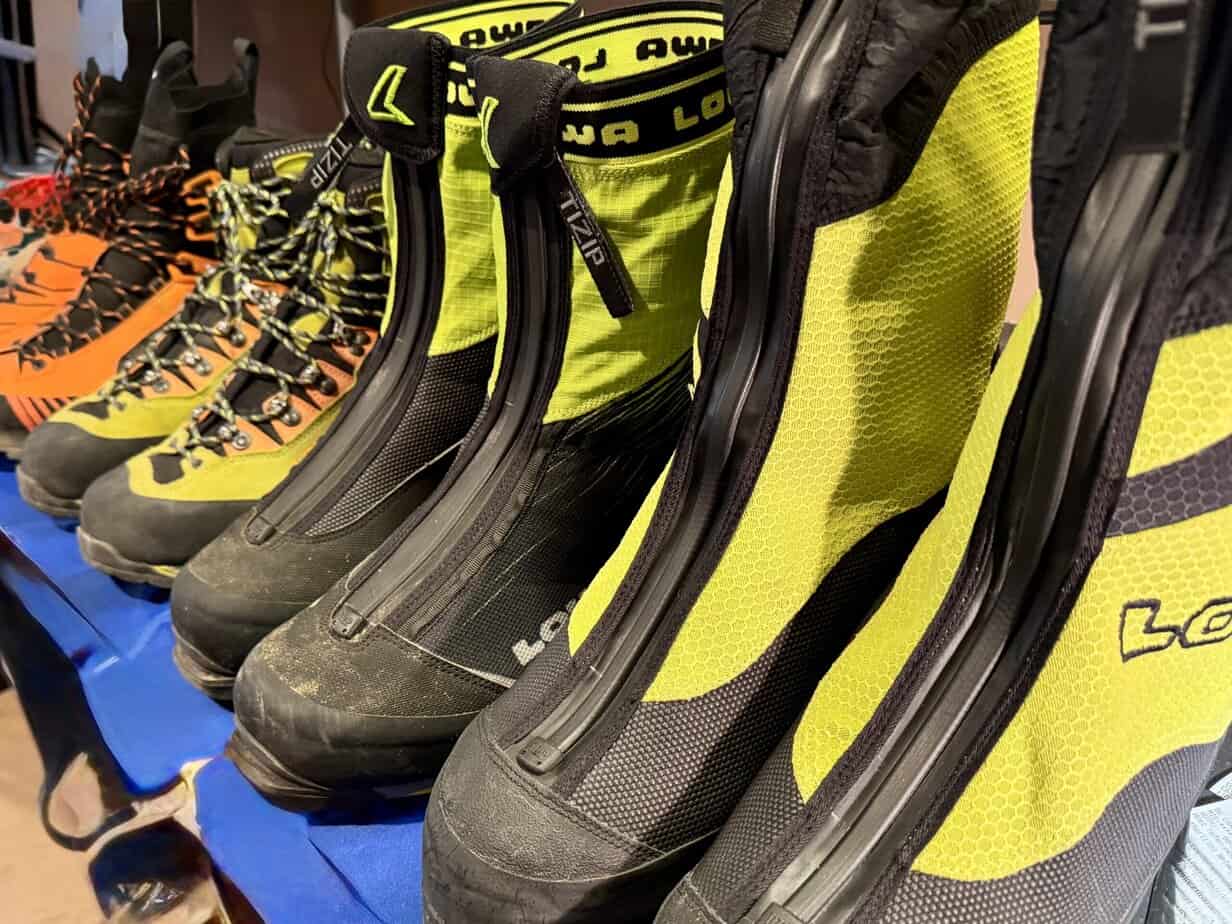
Choosing mountaineering boots isn’t just about gear; it’s about how your body feels miles into a climb, how confident you are placing each step on snow, ice, or rock, and how your feet carry you through long days in the mountains.
I’ve guided on Mount Shasta, Mount Whitney, and peaks across Mexico, and I’ve worn a lot of boots along the way. Some I’ve learned to tolerate, others I’ve grown to trust and love.
Keep in mind: boots are personal. What works for me might not work for you. Finding the right pair can be a challenge, but the right boots can become a beloved companion on the mountain. Here are the boots I keep coming back to – and why they matter to me.
Scarpa Rebelle Tech 2.0 HD – Lightweight Boots for Fast Alpine Climbs
The Scarpa Rebelle Tech 2.0 HD has a special place in my pack. When I first tried them, I remember thinking they weren’t very comfortable. Over a few climbs, though, they transformed into a precise fit, and suddenly the boot felt like it was made for me.
I’m never overly fast on a mountain, but I love these boots where every ounce of weight matters. They never weigh me down or hold me back.
There’s a freedom in the Rebelle. They are light, agile, and warm enough to keep your feet comfortable on all but the coldest days. Using them, I feel closer to the mountain and more connected to each step. I love the way this boot disappears on your foot and lets you focus entirely on the climb. For fast, technical climbs where I need to move efficiently, these boots are my first choice.
Lowa Cevadale II GTX – Glacier Boots for Snow and Ice
The Lowa Cevadale II GTX has been my companion on my most recent glacial climbs. Like all of my other Lowa boots, I trust them completely. I’ve found that when the route is primarily snow or ice, these boots are fantastic.
I do not like them for anything requiring technical foot placement. I remember standing on the Hotlum Glacier on Mount Shasta this summer. I was instructing one of our glacial skills courses, and after hours on the ice, my feet were still secure and warm. That feeling of confidence and comfort is priceless when the terrain is unforgiving.
They aren’t light or nimble on rock, but they don’t need to be. When the goal is glacier-focused, these boots let me focus on the climb instead of my feet.
Lowa Alpine Ice GTX – My All-Around Cold-Weather Boot
The Lowa Alpine Ice GTX is the boot I reach for most often in the spring. I’ve worn them on early-season Shasta climbs and on technical routes in the Cascades. They fit my foot like an extension of myself and keep my feet warm without slowing me down.
What I love most about these boots is the balance they offer. They are protective without feeling cumbersome, technical without being intimidating. Every time I lace and zip them up (they’re a double boot), I know my feet won’t get cold. They handle demanding conditions and still let my feet feel connected to the terrain. For me, these boots have become my favorite pair.
Lowa 6000 RD – Extreme Cold for High-Altitude Expeditions
For high-altitude climbs or extreme cold, I rely on the Lowa 6000 RD without hesitation. I remember taking them to Pico de Orizaba for the first time. On a previous attempt, my feet had been painfully cold, so I was eager to see how these boots performed.
The 6000 RD didn’t disappoint. From the moment I laced them up, my feet were warm and supported, and at times I even felt almost too warm. That first experience gave me a level of confidence on Orizaba that I hadn’t felt before. I knew that no matter the conditions, my feet would stay warm and protected.
They are heavy, yes, but for me, every ounce is worth it when the temperatures drop.
Choosing the Right Mountaineering Boots
Again, finding the right mountaineering boots is deeply personal. You need to walk in them, test them on terrain similar to what you’ll encounter, and spend time feeling how they respond to your foot and movement.
For me, Lowa fits best, but others may swear by La Sportiva, Scarpa, or Asolo. Comfort, warmth, and technical performance matter more than weight or style. Some boots are ready from day one; others need breaking in. Find boots that suit your foot, your climb, and the conditions you expect. They are the foundation for enjoyable climbs on Mount Shasta, Mount Whitney, and peaks around the world.
Conclusion
I view mountaineering boots as more than equipment. They are my companions on the climb. The right pair brings confidence, comfort, and reliability.
Whether you choose versatile all-around boots, glacier specialists, or extreme cold options, the boots you trust will shape your experience. When they feel right, your climbs on Mount Shasta, Mount Whitney, and beyond become far more comfortable, memorable, and enjoyable.
Written By: Caleb Burns